Initiative18
Initiative18
Back to home

Campaign “Freedom Needs the Whole Picture.”

Campaign “Freedom Needs the Whole Picture.”

Initiative 18 is committed to establishing “free, safe and sustainable media” as the 18th Sustainable Development Goal of the United Nations. Only a diverse media landscape gives society the chance to see reality from all angles – not just one.

To make this message tangible, we turn to a powerful symbol: iconic images that have burned themselves into our collective memory. Images that sparked debates, stirred emotions, marked historical turning points.

The lifeless body of Alan Kurdi washed up on a beach. The man who stood alone against a column of tanks in Beijing. The footprint of the first human on the Moon. The girl running naked, crying and burned down a road in Vietnam after a napalm attack.

All of these photographs show moments that moved the world – and they only became global symbols because they were told through many media and from different perspectives.

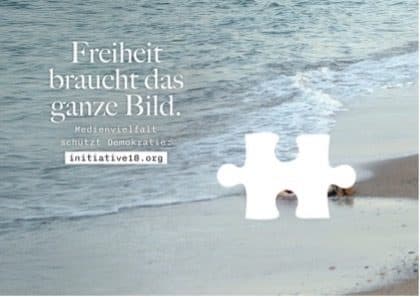
In our campaign, each motif is missing a piece: a cut-out puzzle piece. It represents what disappears when media diversity is lost. If a piece is missing, the picture is incomplete – and so is our understanding of the truth.

We do not judge the events these images depict. Each motif tells stories that people interpret differently – sometimes contradictory, often emotional. That is precisely the point: a diverse media landscape provides space for all of these viewpoints, side by side and in dialogue. Only in this way can a complete picture emerge, carried not by a single voice, but by the sum of many perspectives.

Media diversity protects democracy.

Because freedom needs the whole picture.

Motif: “Alan Kurdi”

Motif: “Alan Kurdi” - Campaign poster
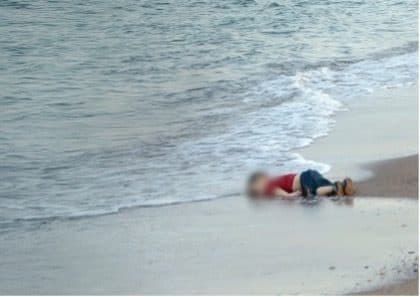
Motif: “Alan Kurdi” - Original photograph

In September 2015, a photograph shook the world: the lifeless body of three-year-old Alan Kurdi, washed ashore on a beach in Turkey. Alan drowned when his family tried to flee the war in Syria. The image became a symbol of the human tragedy of the refugee crisis and shaped the public debate about flight, migration and humanitarian responsibility.

Significance for media diversity:

The fact that this image became known worldwide was not due to a single medium, but to the parallel reporting of many different voices: international news agencies, major daily newspapers, independent journalists and social media platforms. This diversity prevented the photo from being suppressed or forced into a one-sided context. Instead, it reached people through the most varied channels and narratives – sometimes as a political appeal, sometimes as a humanitarian memorial.

Media diversity guarantees that uncomfortable truths can become visible. When only a few centralised voices control the flow of information, there is a danger that crucial images – and thus crucial societal discussions – are never seen.

Freedom needs the whole picture. Only when many perspectives exist side by side can we form a complete, critical and personal picture of the world.
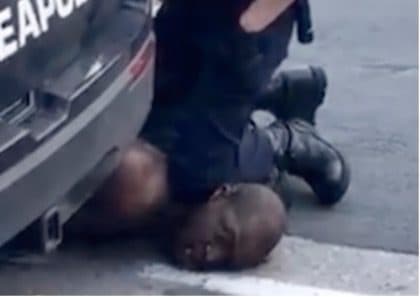
Motif: “George Floyd”

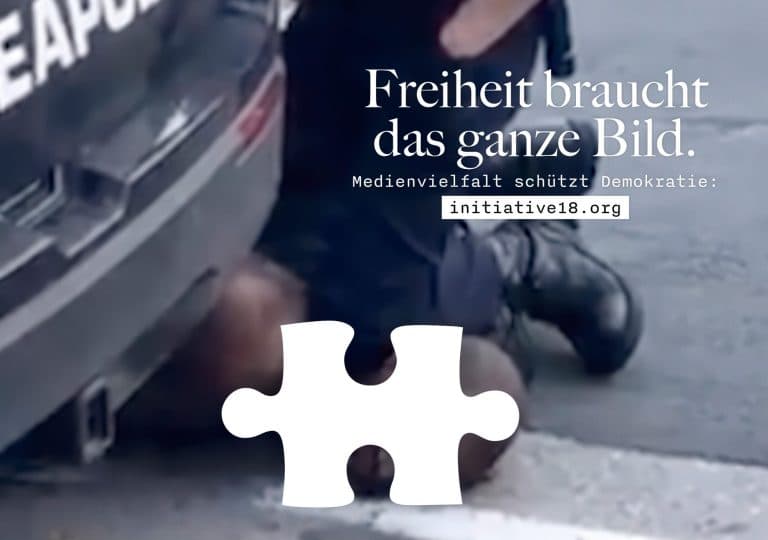
Motif: “George Floyd” - Campaign poster
Motif: “George Floyd” - Original photograph

On 25 May 2020, a bystander in Minneapolis filmed a police officer kneeling on George Floyd’s neck for minutes. Floyd repeatedly said he could not breathe and died shortly afterwards. The video spread around the world within hours via social media, accompanied by reporting from independent and established news outlets. The footage triggered global mass protests against police violence and racism under the motto “Black Lives Matter” and led to the arrest and conviction of the responsible officers.

Significance for media diversity:

This image and the accompanying videos could easily have been suppressed or distorted in a restricted media system. Only through the combination of citizen journalism, independent newsrooms and international media platforms could the incident come to light unaltered. Different media provided space for various perspectives: personal testimonies, legal analyses, historical contextualisation. Media diversity ensures that abuses of power can be documented and made visible – even when they are uncomfortable for institutions or governments. Without it, many injustices would have remained invisible.

Freedom needs the whole picture. Only an open and diverse media landscape protects the truth from disappearing.

Motif: “Napalm Girl”, Vietnam War 1972

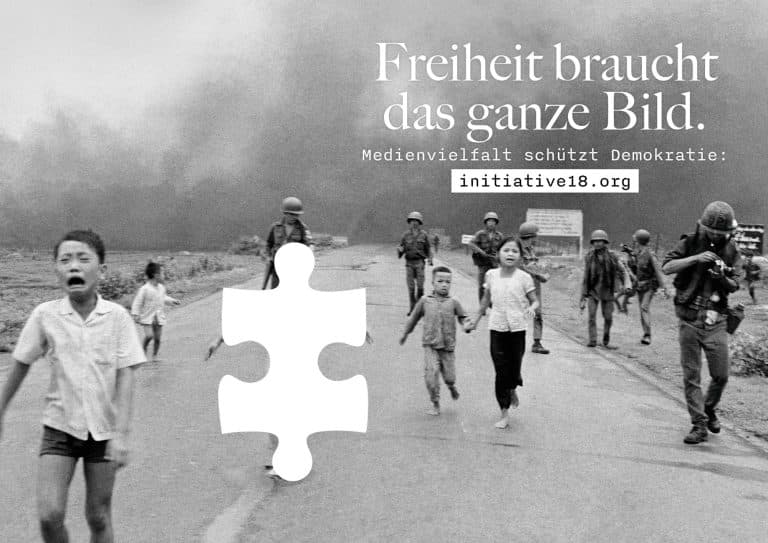
Motif: “Napalm Girl”, Vietnam War 1972 - Campaign poster
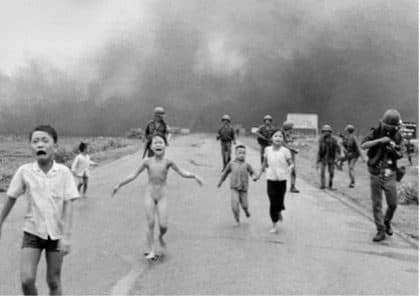
Motif: “Napalm Girl”, Vietnam War 1972 - Original photograph

On 8 June 1972, nine-year-old Phan Thị Kim Phúc fled naked, screaming and with severe burns from an accidental napalm attack on her village during the Vietnam War. The photograph went around the world and became one of the most defining anti-war images of the 20th century. It changed public perception of the war and helped increase pressure to end it.

Significance for media diversity:

The image could easily have been censored in a controlled media landscape – because of its brutality, its political sensitivity or simply because it did not fit the official narrative. But thanks to an international press that worked independently and felt committed to publication, it reached people all over the world. Different media offered different perspectives: humanitarian, political and military.

Media diversity ensures that the reality of war and suffering is not hidden. Only through many independent voices does the truth remain visible – even when it is uncomfortable.

Freedom needs the whole picture. Only when we are allowed to look can we act.

Motif: “First Human on the Moon”

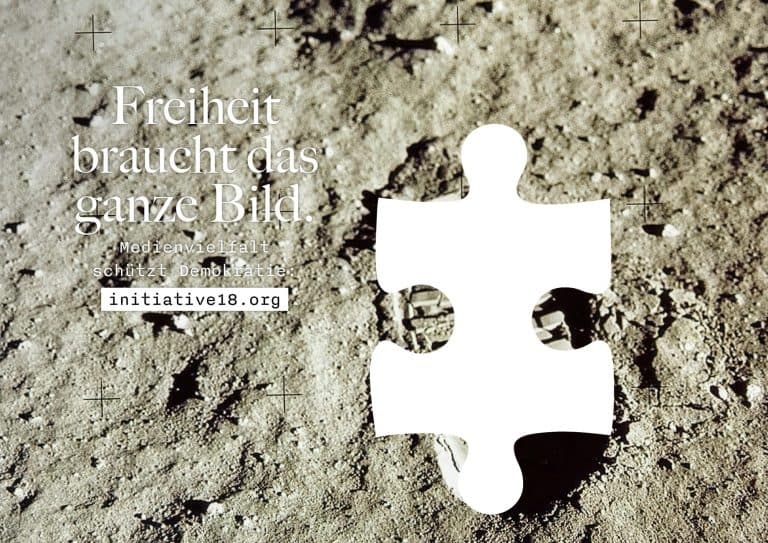
Motif: “First Human on the Moon” - Campaign poster
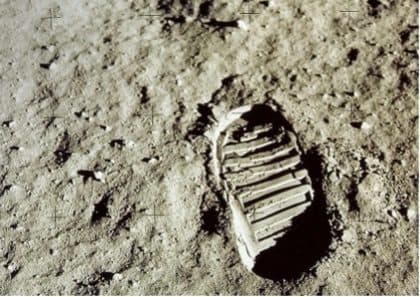
Motif: “First Human on the Moon” - Original photograph

On 20 July 1969, Neil Armstrong became the first human to set foot on the Moon. The photograph of the boot print in the lunar dust became an iconic symbol of scientific progress and human curiosity. Millions followed the Moon landing live – thanks to the reporting of many television and radio stations worldwide.

Significance for media diversity:

In a world with limited media diversity, this event might only have been visible through individual state-controlled sources. The parallel reporting from different countries and perspectives made the event not merely an American triumph in the Cold War era, but a global moment in human history. Scientific, technical, political and even cultural interpretations became visible side by side and gave the event its full significance.

Media diversity ensures that world history is not told from just one point of view. It opens the way for different narratives, backgrounds and meanings – and lets people judge for themselves what this moment means to them.

Freedom needs the whole picture. Only when many voices report does history become a shared experience.

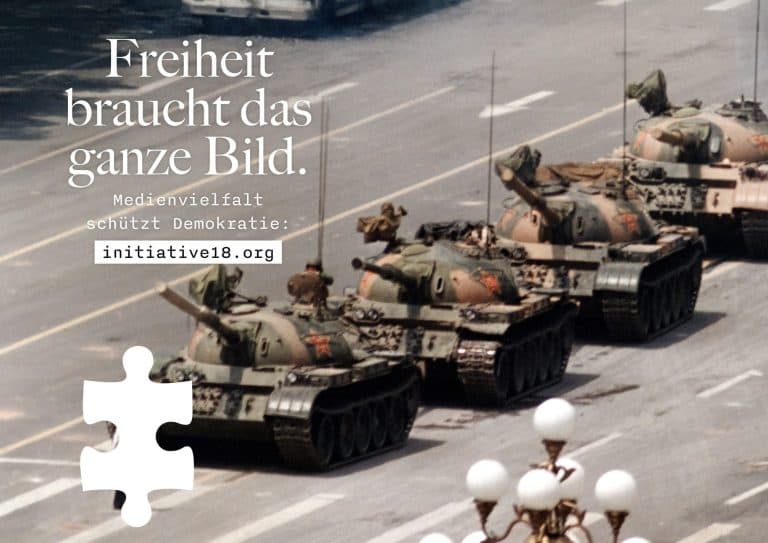
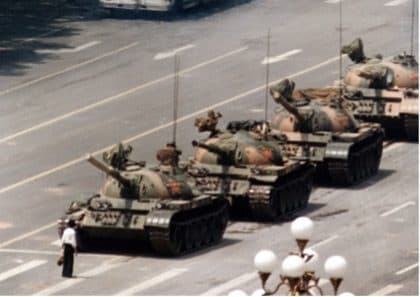
Motif: “Tank Man”, Tiananmen Square

Motif: “Tank Man”, Tiananmen Square - Campaign poster
Motif: “Tank Man”, Tiananmen Square - Original photograph

On 5 June 1989, one day after the bloody suppression of the democracy protests in Beijing, an unknown man stood alone against a column of tanks. The image of the “Tank Man” was secretly taken and smuggled out of China. It became one of the most famous symbols of the courage of the individual in the face of state power.

Significance for media diversity:

In China itself, this image was immediately censored – for most people there, it officially does not exist. The world only learned of it thanks to the work of several international journalists who independently distributed the photo and videos. In a one-sidedly controlled media system, this moment would have been lost – and with it an important piece of contemporary history.

Media diversity ensures that images which challenge power do not simply disappear. It enables stories of resistance, freedom and humanity to be preserved – even when they contradict powerful interests.

Freedom needs the whole picture. Only an open and diverse media landscape protects memories from being forgotten.

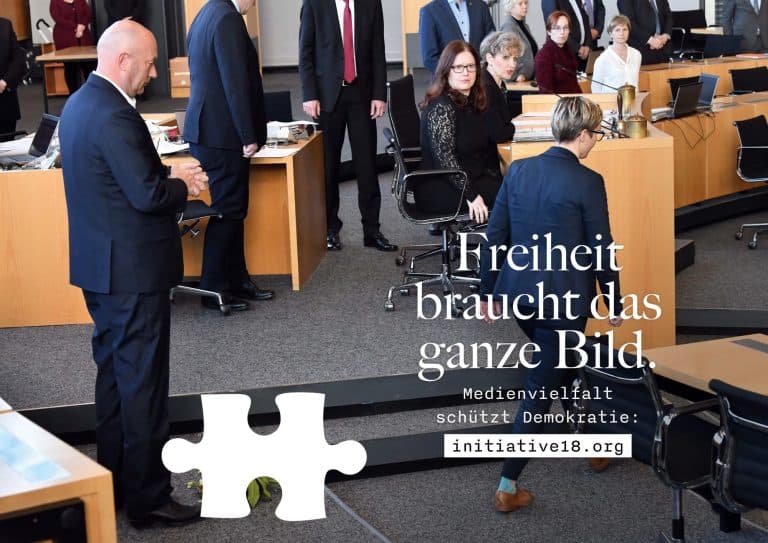
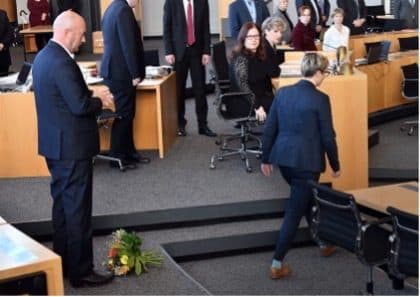
Motif: “Flower Throw in the Thuringian State Parliament”

Motif: “Flower Throw in the Thuringian State Parliament” - Campaign poster
Motif: “Flower Throw in the Thuringian State Parliament” - Original photograph

On 5 February 2020, Thomas Kemmerich (FDP) was unexpectedly elected Minister-President of Thuringia with the decisive votes of the AfD – a taboo-breaking moment in German post-war politics. In protest, Susanne Hennig-Wellsow, state leader of the Left Party, threw the bouquet of flowers intended for the designated Minister-President Ramelow at Kemmerich’s feet.

Significance for media diversity:

The interpretation of this moment depended heavily on who was reporting. Media with different political orientations delivered a spectrum of interpretations: from a courageous act of protest to symbolic demarcation to political staging. Only in the diversity of these perspectives could citizens fully understand the significance of what had happened.

Media diversity here means: controversial political actions do not remain monolithic, but become visible through different interpretive offerings. In this way, democratic self-evidence is preserved – even in complex or disturbing situations.

Freedom needs the whole picture. Only through diverse media perspectives do informed understanding and genuine opinion formation emerge.

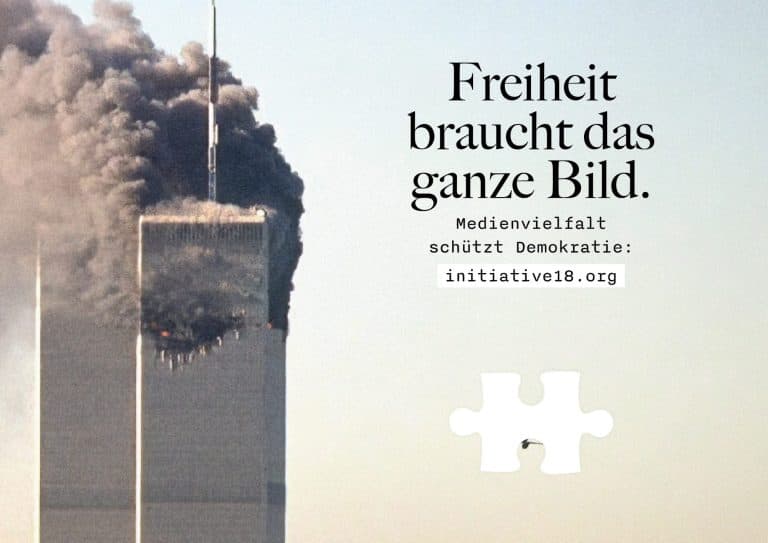
Motif: “11 September 2001”

Motif: “11 September 2001” - Campaign poster
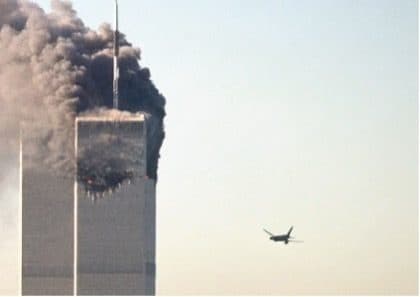
Motif: “11 September 2001” - Original photograph

On the morning of 11 September 2001, two hijacked passenger planes crashed into the towers of the World Trade Center in New York. The footage of the burning towers and the second plane moments before impact went live around the world and became etched into memory as one of the most-watched images in modern history.

Significance for media diversity:

The events of that day were captured simultaneously by countless cameras, news agencies and eyewitnesses. Different media reported in real time – some factually, some emotionally, some speculatively. This diversity of sources was crucial to understanding what was happening from different angles: as a terrorist attack, as a geopolitical turning point, as a human tragedy. In a controlled media system, the speed, perspective and openness of this reporting would have suffered massively.

Media diversity ensures that historic moments can be captured in all their complexity. It prevents a single narrative from determining the entire public discourse – especially in times when history unfolds by the second.

Freedom needs the whole picture. Only many voices together produce a complete testimony to the truth.

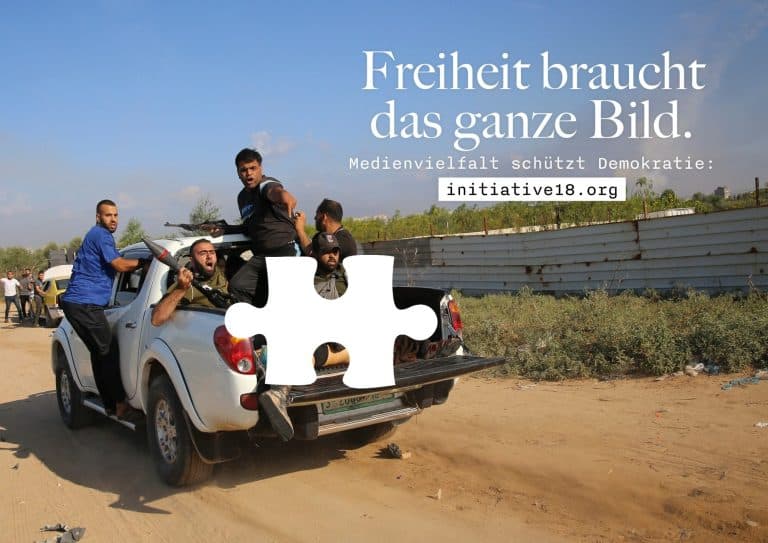
Motif: “Conflict in the Gaza Strip”

Motif: “Conflict in the Gaza Strip” - Campaign poster
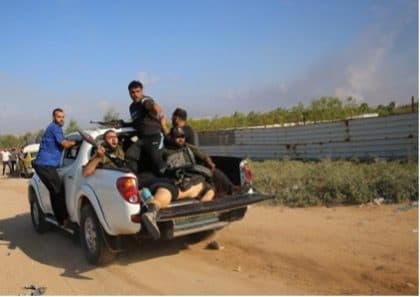
Motif: “Conflict in the Gaza Strip” - Original photograph

The image shows fighters of the terrorist organisation Hamas transporting the injured or killed festival attendee Shani Louk on the back of a pickup truck after the attacks of 7 October 2023. It comes from the reporting on the escalating violence in the Gaza Strip and illustrates the brutality and immediacy of armed conflicts. Such images are often only possible because journalists and photographers work on the ground at great personal risk.

Significance for media diversity:

In armed conflicts, the information situation is often chaotic and is deliberately influenced by all sides. Different media can present one and the same image in completely different contexts: as evidence of atrocities, as a heroic image, as propaganda or as a humanitarian cry for help. Only when these perspectives exist side by side and can be verified can we form a more complete picture.

Media diversity here means: conflict reporting must not be controlled exclusively by one of the parties involved. Independent and diverse voices are crucial for separating truth from propaganda – and for making the human costs of war visible.

Freedom needs the whole picture. Only through many independent eyewitnesses can we recognise the reality behind the headlines.